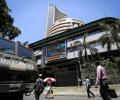
Bank Nifty pared all its intraday gains to end over 1% lower led by losses in BoB, ICICI Bank, Axis Bank and Bank of India

The year 2015 may well turn out to be a watershed in global macroeconomic adjustment.

Quite a few large- and mid-cap stocks are yet to recover from the note ban, pharma, banking and rural demand-based industries among laggards.

Investors booked profit ahead of the outcome of the two-day US Fed policy meet which begins today.

Hassan Rouhani to offer Friday prayers in Hyderabad's Mecca Masjid.

Albanese, 56, will take the helm on April 1.

It reported a loss of Rs 36 crore (Rs 360 million), the first such negative result in 10 years.

The global financial services major had earlier said that the central bank would keep its policy rates on hold.

The bourse's valuations may get a boost, as it gets set for its OFS of about Rs 10,000 crore.

Long-term investors can stay put in the markets, but should brace for volatility

Experts prefer domestic consumption-driven plays and defensives such as information technology and pharmaceuticals

In the mid-quarter review on December 18, the Reserve Bank left key policy rates unchanged but said it will hike interest rates if inflation does not subside.

Traders say prices will remain elevated due to increased demand, lower availability

If financials and oil sectors were removed, India Inc has done quite well.

The BSE Sensex moved up 103 points to 35,319.35, while the wider NSE Nifty finished at 10,741.70, up 23.90 points.

Faced with sluggish economic growth and dwindling exports, China on Wednesday devalued its currency for the second consecutive day.

Markets climb higher tracking global cues.
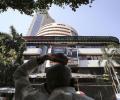
Aviation companies were in focus with all the three airliners SpiceJet, InterGlobe Aviation and Jet Airways adding in the range of 2% to 3% on the BSE

Investors booked profits in range-bound trade, led by PSU, oil & gas, energy, infrastructure, telecom, realty, healthcare, bankex, FMCG, capital goods and power counters.

While okra was being sold for Rs 100-120 a kg and cauliflower for Rs 120-140 a kg in Mumbai and its suburbs, all other vegetable prices have increased by almost 100 per cent since July 20.

'In the long run, the boost to farmers' incomes must come from technological breakthroughs,' says Pratap S Birthal and Digvijay S Negi.

Beijing did not announce expected policy support over the weekend
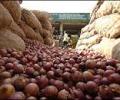
Traders said wholesale prices are firm as supplies from producing regions have been lower in the past couple of days.

Wipro, Steel Authority of India, HDFC Bank, Mahanagar Telephone Nigam, Bharat Heavy Electricals and Reliance Commnications among companies reporting a decline in headcount in FY17.

Analysts expect inflation to peak in the first half of 2016-17 and moderate, thereafter, on the back of positive impact of monsoons

Prices of the key vegetable have also gone up in various cities.

In the broader market, the S&P BSE Midcap and the S&P BSE Smallcap indices gained 0.5% and 0.4%, respectively.

Gains were led by HUL on better-than-expected margins in March quarter and capital goods shares.
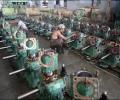
The headline HSBC India Purchasing Managers' Index -- a composite gauge designed to give a single-figure snapshot of manufacturing business conditions -- stood at 53.3 in November significantly higher from 51.6 in October.

The US Fed's rate cycle is set to turn later this year, but India is in a much better position than it was in 2013.

A survey conducted by Business Standard reveals that a majority of the country's states are still firmly against the move, while a few are open to considering only conditionally.

Eight Sensex biggies such as Reliance, L&T, BHEL, SBI and ICICI Bank are among the worst hit.

23 Nifty companies reported an annual decline in net profit.

Today Aashirvaad, ITC says, has 75 per cent of the market.

'We need to further catalyse economic growth and the government needs to increase revenue,' says G K Agarwal, BJP's national spokesperson on economic affairs.

ICICI Bank was the top loser along with index heavyweights RIL, ITC and HDFC.

It is important to note that slowdown in activity is really confined to a selected few regions within China.

From linking innovation with supply of inputs to providing contract farming, the private sector can help agriculture move to the next stage of development.

This means lower losses on fuel sales by Indian oil companies and a shrinking oil subsidy bill for the government.

Imported Ethane will substitute its current propane imports and a portion of naphtha used for ethylene production.
